Leaving my thoughts behind
The rabbit hole for journaling can go deep. You can use different formats, different journaling techniques, you can even start a bullet journal, which has its own practices. The tools you use for writing can also change the experience, for example the paper size and texture. And don't get me started on pens. Many people swear by fountain pens. They elevate journaling to something profound, something you do with intention.
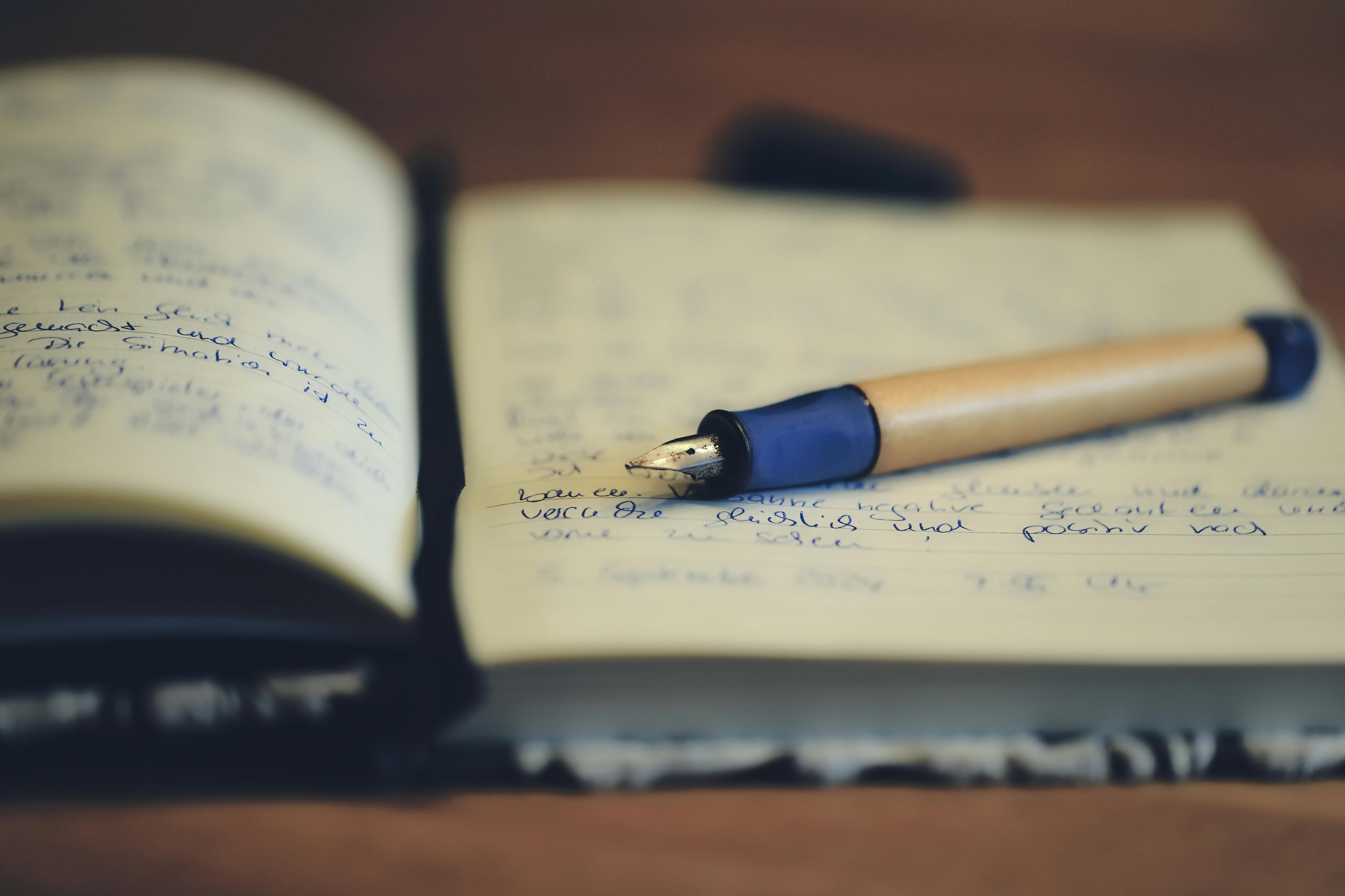
There are also people who prefer practicality. The pen should do its work and shouldn't get in the way of putting thoughts onto paper.
Archival
I got into this rabbit hole for the last two weeks. I looked for high-quality writing utensils and checked different pens that could satisfy my need. It was important for me to choose a pen with ink that would not fade in the future. The biggest enemy for our handwriting is light, water and the paper itself. Light will fade the writing over time. Water can destroy it completely. And the paper should be acid-free, otherwise it can degrade the ink or worsen the paper quality over time. There are even ISO norms for pens that make sure that they are document-proof, for example ISO 14145-2 for rollerball pens or ISO 27668-2 for gel pens.
Surviving me
Why is that important? I want to be able to read my diary entries after a long period of time. I fear the experience of opening up an old diary and looking at nearly blank pages because the ink did not hold up just because I made a wrong decision with my writing utensils 20 years ago. But there was a more important aspect why I wanted to future-proof my writings. I wanted my diaries to survive me. They should still be readable after I passed. I wanted to leave something behind and with that a look into my thoughts and my daily life, my habits and my fears. If you just take a pen with black ink and don't overthink the paper choice, there is a good chance that the ink will still be readable after decades of protecting the materials from direct sunlight. But to make sure that it survives many decades, even centuries, you have to choose your tools carefully.
Questioning the practicality
After researching the right pen and the most suitable paper, I was close to ordering a good fountain pen with archival ink (which can be an expensive option). I took a step back and asked myself if this is really necessary. Who am I doing this for? Do other people really want to read my diary entries after my death? Sometimes I write multiple pages a day filled with mundane things or thoughts that are only relevant to me. There probably is nothing interesting for another person to gain here. Even for people who are close to me, they would be confronted with walls of text that described my daydreams in detail. What would be my reaction if someone that was close to me left behind thousands of pages for me to read? It could hurt to read these words; it could even change how I think about the relationship or the person after their death. These are their deepest thoughts, things he or she would not say to me or another person directly. Is it right to have a look into that?
So there were two insights for me. On one hand, I questioned if someone would even want to read my diary entries because they only have value for me. And on the other hand, I am not sure if I want someone to read all my entries because I can't control how they are perceived and I am no longer there to set the record straight. The image that is left of me can be changed after my death by my writings. And I don't want to burden the reader with things that can be revealed there. There is also the risk of censoring myself because I know that people could read it later.
Writing for myself
I have to accept that the thought of leaving something behind serves only me and my peace of mind during my lifetime, but is not something that is necessarily practical. A diary should be written for my own enjoyment. It should serve me first and foremost. Still, I will try to preserve my written word as best as I can because I don't know how I will think about this topic in the future or when I am older. It doesn't hurt to make sure that it will hold up for a long time and decide later how I want to handle this topic.